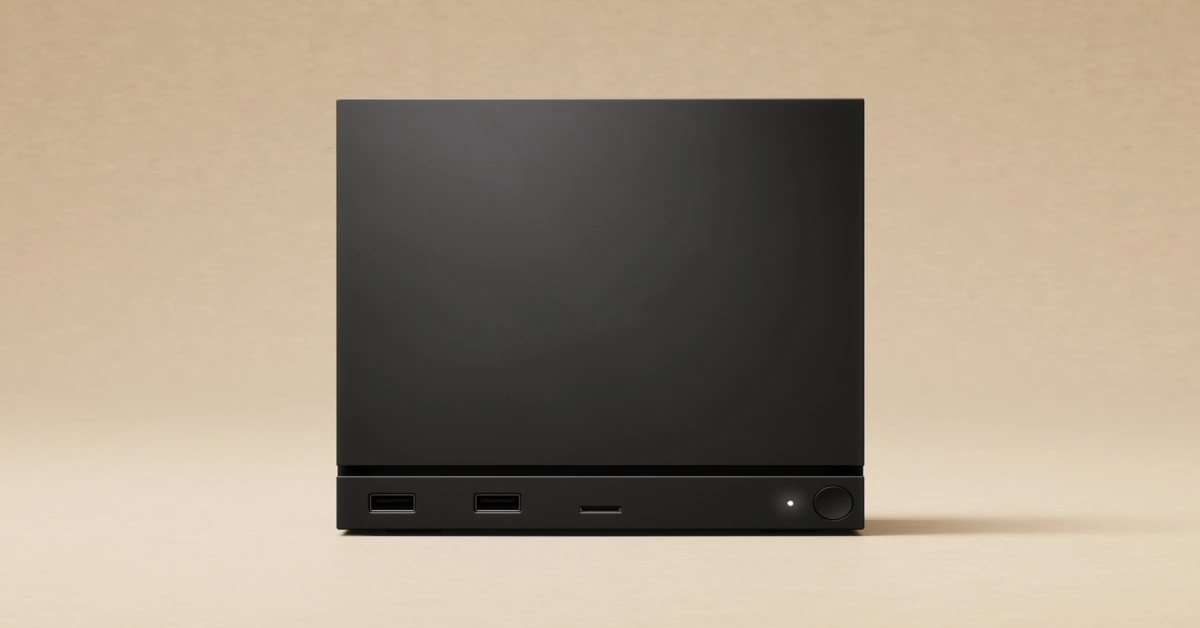
Even though Valve remains silent, the existing data proves it. Between the recent SteamDB identification update and the shipment of 50 tons of hardware to the US, Steam Machines 2026 is no longer a matter of “if”, but rather a documented “when”.
- Valve is preparing a multi-tier hardware launch with four different Steam Machine configurations recently identified in Steam client metadata.
- The entry-level unit is expected to be priced around $499, positioning the hardware as a direct competitor to traditional high-end consoles.
- Recent logistics tracking confirmed that 50 tons of the hardware has arrived in the United States, indicating an imminent retail launch.
The living room PC gaming landscape is changing. Recent logistics tracking, seen by SadlyItsBradley on
The physical move coincides with the appearance of four different hardware IDs in Steam’s database, indicating a tiered launch strategy designed to capture both entry-level and premium market segments.
In an era where hardware transparency is rare, this logistics and digital footprint provides a factual roadmap for what users can expect from Valve’s next major hardware evolution.
👉 READ ALSO: Steam Engines and Hardware: Everything We Know
Four Steam Machine Versions Leaked
According to Wccftech, Valve plans to launch four different versions of the Steam Machine, including 512GB and 2TB packages, which will likely come bundled with their respective peripherals, such as the Steam Controller and the Steam Frame VR headset.
This version, discovered by users on SteamTracking, is a direct response to various needs of the SteamOS ecosystem. The lower-tier unit is expected to serve as an entry point for 1080p and 1440p gaming, while the higher-tier 2TB model provides the necessary space for a local high-fidelity library.
This multi-pronged approach allows Valve to compete simultaneously with traditional consoles and mid-range homegrown PCs.
How do the hardware tier values compare?
Current hardware tiers focus on storage capacity and peripheral inclusion over raw processing power, leveraging AMD’s unified semi-custom architecture.
As for the 50 ton cargo, around 20,000 units, it appears Valve is prioritizing “Ready to Ship” inventory of this particular configuration to avoid supply chain bottlenecks impacting the Steam Deck launch.
Does Valve’s living room strategy finally make sense?
Valve’s return to the living room is a calculated move that builds on the foundation of Steam Deck’s success.
For users already invested in the Steam ecosystem, the Steam Machine 2026 offers a high-utility path to big-screen gaming without the need for a traditional tower PC.
Download Free Allkeyshop Browser Extension
For all the latest video game news, trailers, and best deals, be sure to bookmark us. You can find all the best and cheapest online deals for CD keys, game codes, gift cards and antivirus software from verified CD key sellers on our store page.
To not miss any news on Allkeyshop, subscribe to Google News.
MORE RELEVANT ARTICLES
PakarPBN
A Private Blog Network (PBN) is a collection of websites that are controlled by a single individual or organization and used primarily to build backlinks to a “money site” in order to influence its ranking in search engines such as Google. The core idea behind a PBN is based on the importance of backlinks in Google’s ranking algorithm. Since Google views backlinks as signals of authority and trust, some website owners attempt to artificially create these signals through a controlled network of sites.
In a typical PBN setup, the owner acquires expired or aged domains that already have existing authority, backlinks, and history. These domains are rebuilt with new content and hosted separately, often using different IP addresses, hosting providers, themes, and ownership details to make them appear unrelated. Within the content published on these sites, links are strategically placed that point to the main website the owner wants to rank higher. By doing this, the owner attempts to pass link equity (also known as “link juice”) from the PBN sites to the target website.
The purpose of a PBN is to give the impression that the target website is naturally earning links from multiple independent sources. If done effectively, this can temporarily improve keyword rankings, increase organic visibility, and drive more traffic from search results.
