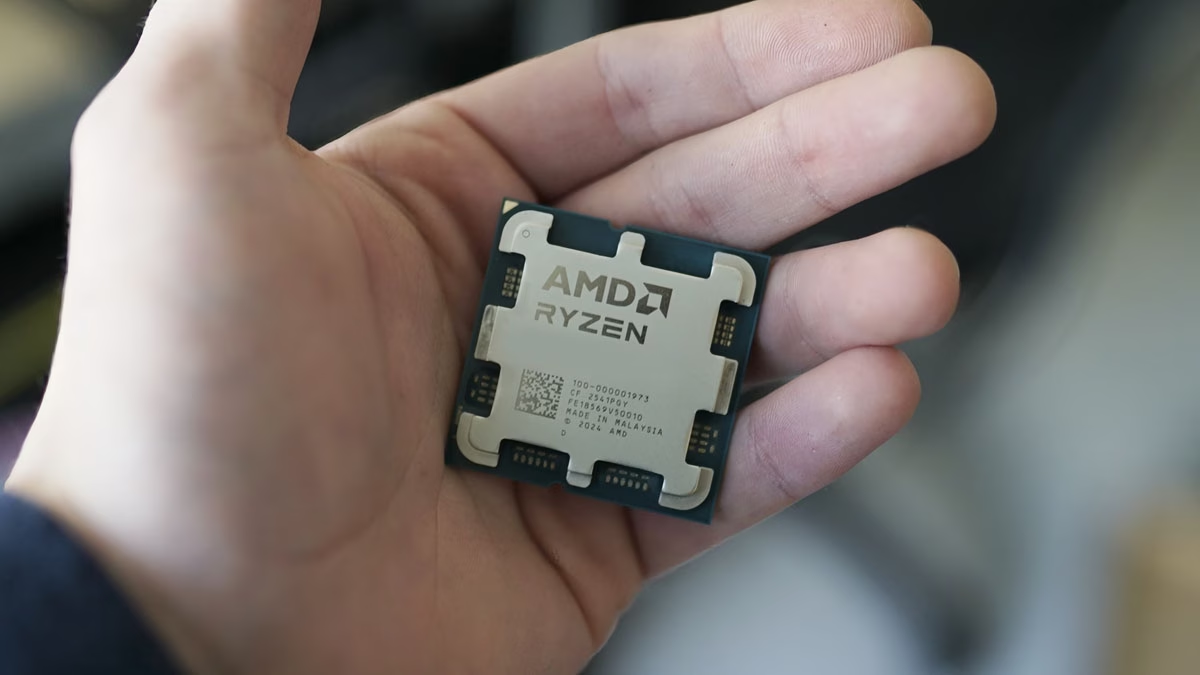
The AMD Ryzen AI 5 435G is now a hot topic of conversation after benchmark leaks initially appeared in cyberspace, showing promising performance. As part of the “Gorgon Point” family based on the Zen 5 architecture, this processor is projected to fill the budget class desktop market through OEM channels.
AMD Ryzen AI 5 435G Appears in Benchmarks
The information we got from Olrak29_’s tweet shows that the AMD Ryzen AI 5 435G managed to score 2,620 for single-core and 10,718 for multi-core. This figure is very interesting because the AMD Ryzen AI 5 435G is able to outperform the Ryzen 5 8600G by around 5% in single-core performance, even though multi-core performance is only around 1% behind the Zen 4 chip.
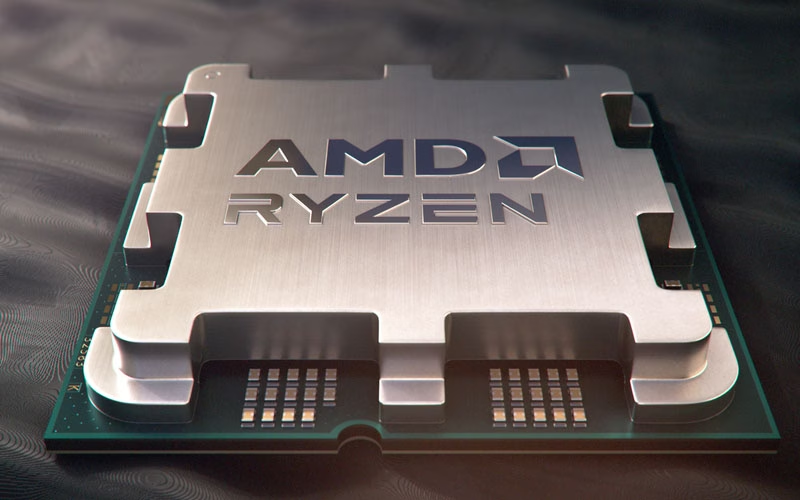
This proves the efficiency of the Zen 5 architecture which brings an IPC increase of 16%, so it is able to cover the difference in clock speed of its predecessor. In terms of specifications, the AMD Ryzen AI 5 435G uses a 6 core and 12 thread configuration consisting of two Zen 5 cores and four Zen 5c cores.

Its main advantage lies in the artificial intelligence sector, where its NPU is claimed to provide three times stronger AI performance than the Ryzen 5 8600G. The graphics sector is also equipped with RDNA 3.5 architecture.
Although the Ryzen 5 8600G may still be superior in gaming because of the larger number of compute units. Desktop systems powered by this chip are expected to start flooding the retail market in the second quarter of this year at friendly prices.
BAlso read other interesting Gamebrott information related to Tech or other articles from Bima. For further information and other inquiries, you can contact us via author@gamebrott.com
PakarPBN
A Private Blog Network (PBN) is a collection of websites that are controlled by a single individual or organization and used primarily to build backlinks to a “money site” in order to influence its ranking in search engines such as Google. The core idea behind a PBN is based on the importance of backlinks in Google’s ranking algorithm. Since Google views backlinks as signals of authority and trust, some website owners attempt to artificially create these signals through a controlled network of sites.
In a typical PBN setup, the owner acquires expired or aged domains that already have existing authority, backlinks, and history. These domains are rebuilt with new content and hosted separately, often using different IP addresses, hosting providers, themes, and ownership details to make them appear unrelated. Within the content published on these sites, links are strategically placed that point to the main website the owner wants to rank higher. By doing this, the owner attempts to pass link equity (also known as “link juice”) from the PBN sites to the target website.
The purpose of a PBN is to give the impression that the target website is naturally earning links from multiple independent sources. If done effectively, this can temporarily improve keyword rankings, increase organic visibility, and drive more traffic from search results.
